CRM in Crisis: How Companies Maintain Customer Relationships During Uncertainty.
- December 9, 2025
Introduction
Periods of crisis, whether economic downturns, global health emergencies, supply chain disruptions, or organizational instability, increase the need for effective Customer Relationship Management (CRM). This article examines how companies can sustain strong customer relationships during uncertainty through transparent communication, empathy-driven engagement, digital transformation, and value-focused service delivery.
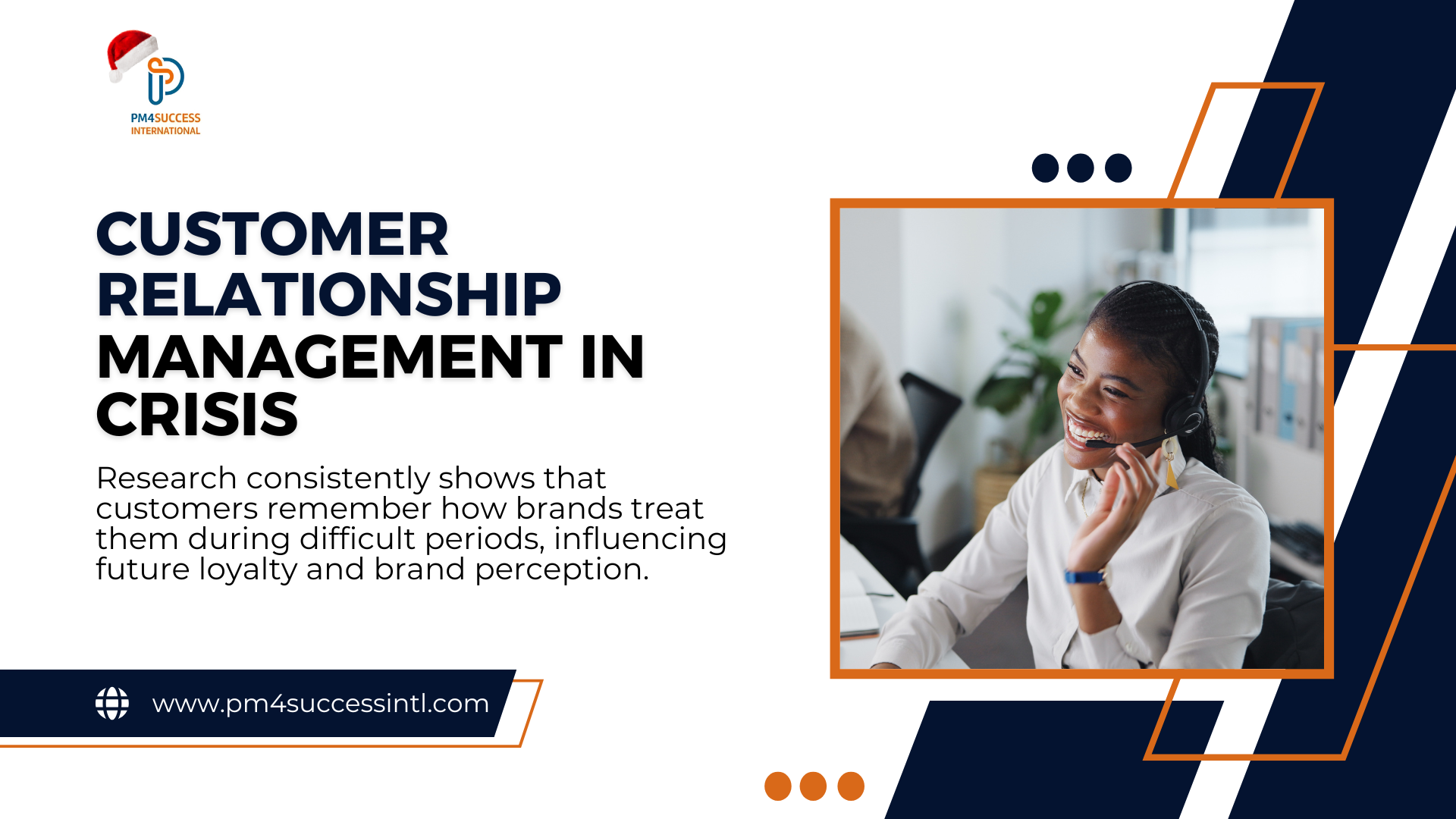
The analysis highlights proven practices that help organizations preserve trust, sustain loyalty, and thrive even in conflict times. Crises introduce instability, disrupt operations, and challenge both organizational resilience and customer confidence. In these moments, the strength of a company’s CRM strategies becomes a decisive factor in customer retention and long-term sustainability. Research consistently shows that customers remember how brands treat them during difficult periods, influencing future loyalty and brand perception (Smith & Bolton, 2020).
This article examines the essential CRM principles that empower companies to navigate uncertainty while maintaining strong, trust-based customer relationships.
Analysis
1. Transparent and Proactive Communication
During crises, silence can be harmful. Customers expect clarity, honesty, and timely updates. Companies that communicate proactively—explaining service delays, policy changes, or operational challenges—help lessen anxiety and build trust. For example, many logistics companies during the COVID-19 pandemic provided real-time shipment updates and openly acknowledged supply chain constraints. Transparency showed accountability and kept customer expectations realistic.
2. Empathy as a Strategic CRM Tool
Crisis increases emotions, making empathy critical. It involves understanding the customer's experience, validating their concerns, and offering solutions suited to their situation. Banks that provided loan deferrals and flexible repayment plans during economic downturns serve as a key example. These empathetic actions helped struggling customers and built loyalty.
3. Leveraging Digital Touchpoints for Continuity
Crises often disrupt traditional interactions. Successful companies quickly shift to digital CRM tools, chatbots, customer portals, AI-driven support, and omnichannel communication to maintain continuous engagement. A retail brand that transitions to virtual consultations, online order tracking, and 24/7 Chat support ensures customers still receive value despite physical limitations.
4. Flexibility in Policies and Service Delivery
Rigid policies break under pressure; flexible ones build goodwill. In crises, companies often adopt return policies, adjust subscription terms, or extend warranties to accommodate customer needs. Such flexibility signals that the brand prioritizes relationships over transactions.
5. Building Value Through Education and Support
Customers appreciate brands that help them navigate uncertainty. Offering free resources, tutorials, advisory services, or product training strengthen customer confidence and positions the company as a partner rather than a vendor. For instance, software companies that provided free webinars and temporary access to premium tools during global disruptions enhanced customer satisfaction and long-term engagement.
6. Collecting and Using Feedback Responsively
Crises change customer needs rapidly. Companies that actively gather feedback through surveys, social listening, and customer support interactions, can adjust strategies in real time. Responding quickly to this feedback ensures customers feel heard, reinforcing trust.
7. Strengthening Internal CRM Capabilities
A crisis is a moment for companies to enhance internal systems, improve CRM analytics, refine customer segments, and retrain frontline employees. Strengthening internal capacity improves responsiveness and ensures a consistent customer experience, even under pressure.
Conclusion
CRM in times of crisis is more than an operational necessity; it is a strategic differentiator. Companies that prioritize clear communication, empathy, digital adaptability, flexibility, and customer-centered support are better positioned to retain customer trust and loyalty. Crises may disrupt normal operations, but they also create opportunities for brands to demonstrate reliability and deepen customer relationships.
Ultimately, organizations that invest in relationship-focused CRM emerge stronger, more flexible, and better aligned with their customers' evolving needs.
References
Smith, A., & Bolton, R. (2020). Customer experience in times of crisis: Maintaining trust
and engagement. Journal of Service Research, 23(4), 451–466.
Nguyen, B., Simkin, L., & Canhoto, A. (2020). The dark side of CRM: Advantaged and
disadvantaged customers. Journal of Business Research, 116, 241–247.
Payne, A., & Frow, P. (2017). Relationship marketing: Looking backwards towards the
future. Journal of Services Marketing, 31(1), 11–15.
Verhoef, P. C., Lemon, K. N., & Parasuraman, A. (2021). Customer engagement in a
disrupted world. Journal of Interactive Marketing, 54, 1–14.
Written by: Hope Needam